Showing posts with label Pests Cornell EDU. Show all posts

Friday, 27 August 2021

BMSB: 2nd Gen. Emerge. Threshold exceeded in Ulster County this week. August 27th, 2021 | The Jentsch Lab

Synopsis:

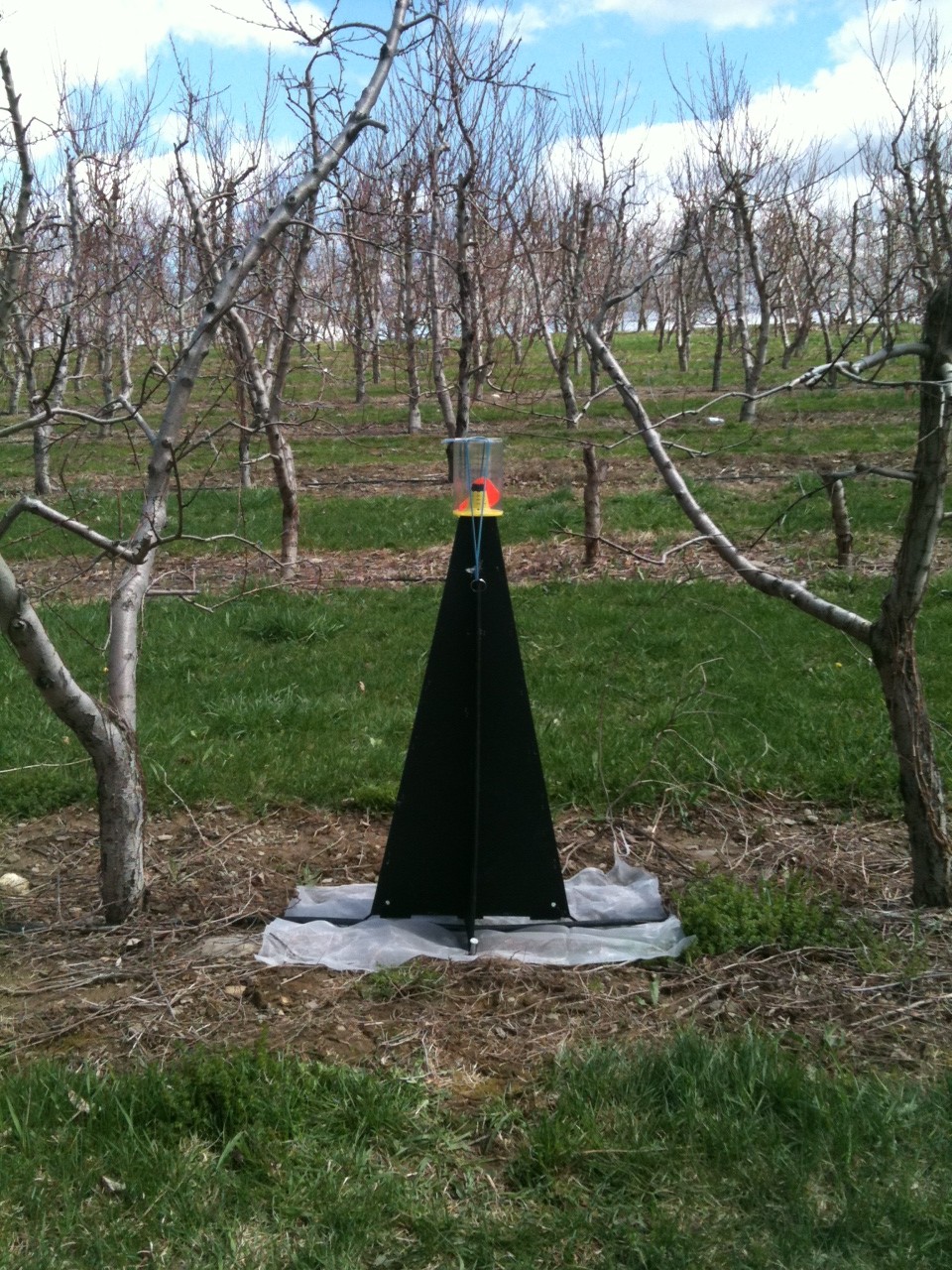
Tedders trap using pheromone combination lures in peach.

Newly emerging nymphs and 1st generation adults have been on the increase, nearing or exceeding threshold in Highland and New Paltz in Ulster County.

The 2nd instar of Brown Marmorated Stink Bug (BMSB) Halyomorpha halys (Stål), newly hatched from eggs last week, are making their way to traps and increasing in numbers throughout the state. All life stages along commercial blocks in mid-Hudson Valley orchard sites have been observed this past week. Movement to apple foliage and fruit is beginning.

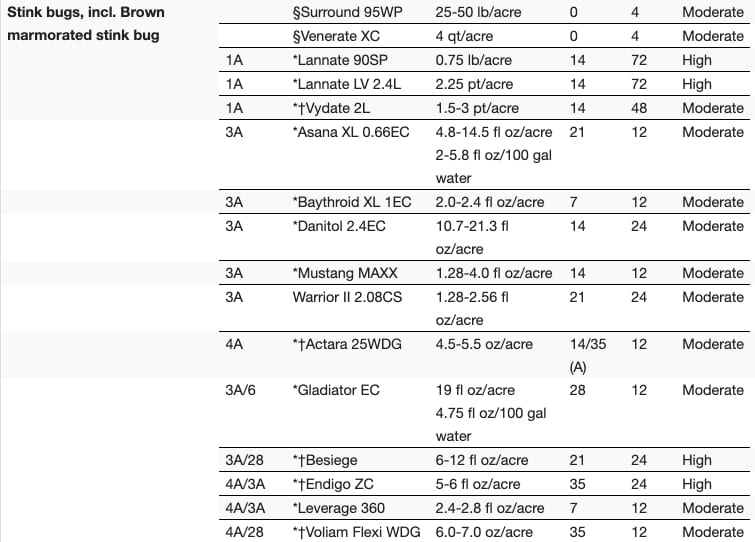
Trap numbers of stink bug in combination with scouting, should precede management during this time of BMSB population build-up. Review labels for pre-harvest intervals (PHI) when choosing materials as the most effective materials have 14 DTH constraints.

When thresholds are exceeded or stink bug become visible along the orchard edge, border row applications should begin. These should then be followed by alternate row, then whole orchard applications as movement of native and BMSB populations begin to migrate into orchards. As stink bug are orchard edge opportunists, the majority of the injury to fruit will occur along the wooded orchard edge, 30′ to 90′ along the perimeter into the block of varieties highly susceptible. These include Golden & Red Delicious, Empire, Ruby Frost, and the last standing…Pink Lady. As fruit diminishes through harvest, BSMB funnel to the remaining fruit, which could be heavily injury in October through early November.
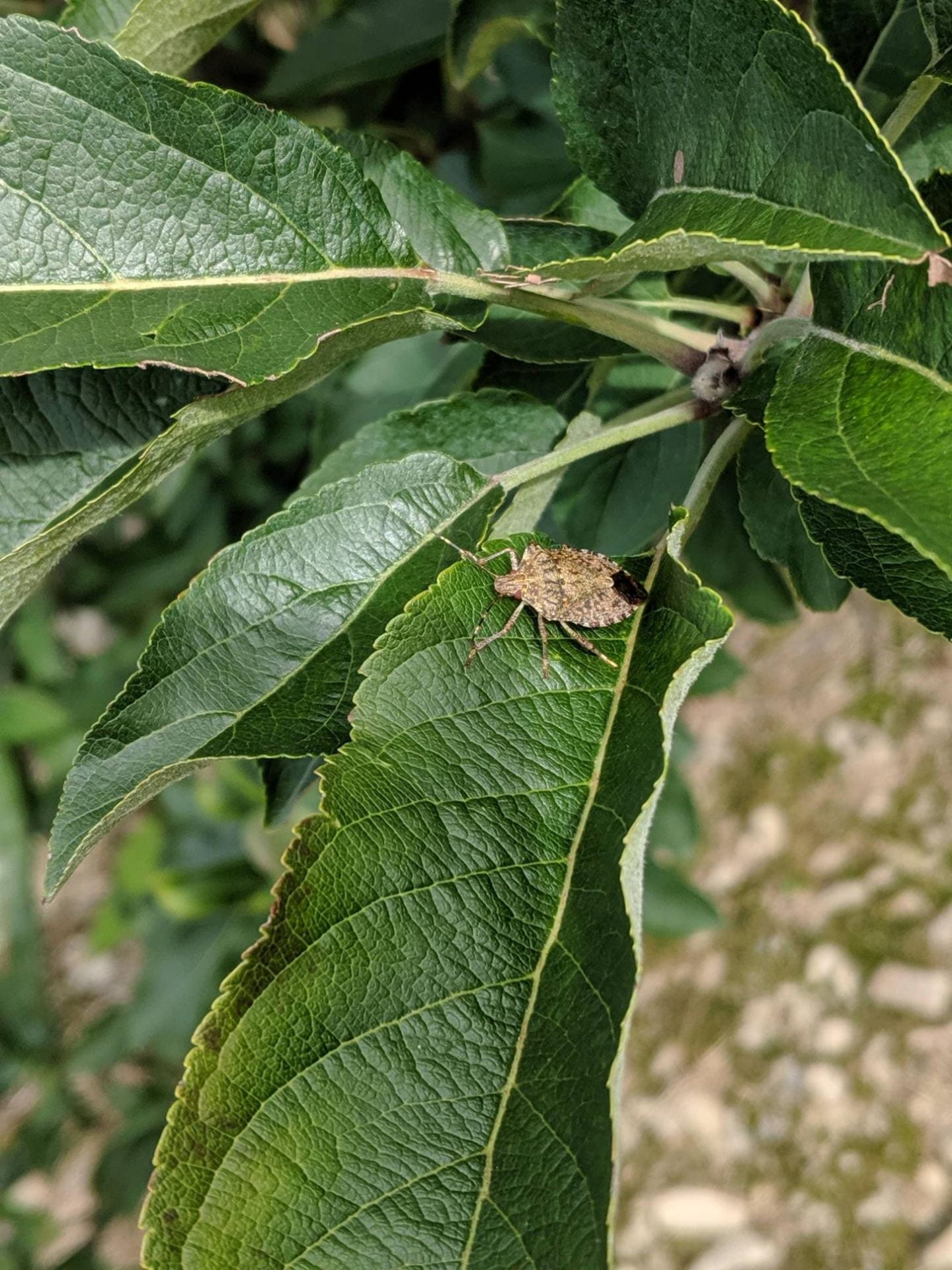
BMSB adult on perimeter Delicious tree, Aug. 28th. 2019

Insecticides selected for whole orchard applications should also have strong efficacy for apple maggot, 2nd gen. obliquebanded leafroller, and as we move into September, codling moth for which management may be required if a third generation arrives.

Scouting is important to determine the insects’ presence and in the orchard. Perimeter and alternate row applications (ARM) beginning at threshold may suffice under low population levels. As the insect is quite mobile through flight and crawling, its movement through the canopy will increase its contact with insecticide residue under ARM .

Insecticide tools with various degrees of efficacy for BMSB management.

Overview:
The brown marmorated and native green stink bug are arboreal insects, residing in woodland habitat. However, when populations continue to rise through July into August, increasing numbers of adults and nymphs can be observed on tree fruit. his has occurred over the past two weeks. Increasing presence of the insects in trees will result in injury in peach, pear and apple rows bordering woodlands and hedgerows. Nymphs ranging from 2nd to 5th instar of both species have been observed feeding on fruit along the orchard perimeter this week.
This newly developing partial second generation will significantly increase BMSB population in woodlands. As host quality from the arborial woodland habitat declines, increasing migration to tree fruit is very likely through the end of August on through to the end of October. Increased scouting should be based on recent and upcoming Tedders trap captures. This will be especially important if weather turns dry with irrigated tree fruit becoming a favored host of BMSB as adults begin to feed more intensively as they prepare for their overwintering phase.

Monitoring: Remember that trap captures combined with scouting for the various life stages of the insect along the orchard perimeter rows should be the basis for insecticide applications. Unlike most other pests, we should not be using IPM thresholds based on stink bug feeding that results in fruit damage. As expression of the injury occurs 7-10 days or longer after feeding, you would have missed your opportunity to reduced injury if you postpone preventative applications while waiting on injury that has already occurred to become visible.

Use a conservative presence and trap threshold on through harvest. Finding a single BMSB or green stink bug in the tree canopy within 100′ of scouted perimeter row would be considered a conservative threshold. Driving along the orchard will likely spook the insects. You’ll need to stealth your way quietly around the orchard…its good exercise in the early evening or morning. Green stink bug tend to remain low while BMSB tend to move to the tops of the trees to feed.

Management: When selecting insecticides for border row, alternate row and whole orchard applications you should consider constraints on your markets. If weather turns to drought, then longer residue based on the active ingredient minimum residue level (MRL) could become an issue, especially in EU markets and Israel. Review your options carefully with regards to harvest dates, PHI’s, re-application intervals and seasonal A.I. volume.

When BMSB populations dramatically increase during late season, migration into orchards can be dramatic. BMSB have been known to funnel down to the last variety standing (such as the high value Pink Lady). In which case applications in late October may be warranted!!

Applications of insecticides selected for whole orchard applications should also have strong efficacy for apple maggot, obliquebanded leafroller and 3rd generation codling moth if CM infestations from 1st or 2nd generation are active, which may also require management.

One of the most effective tools for use to manage BMSB is the active ingredient bifenthrin in a number of formulations.

Bifenthrin has a 12 hr. re-entry interval, 14 day pre-harvest interval and a 30 day re-application interval.

We received notice that the EPA has approved the Section 18 application for bifenthrin for use against the brown marmorated stink bug for 2019. Links below provide access to PDF copies of the Section 18 labels for materials containing the A.I. bifenthrin.

Labels should be made available to the applicator during bifenthrin applications. These can be printed or available as digital files such as PDF’s on tablets or smart phones. The exemption is valid through October 15th 2019 as a “Section 18 EXEMPTION under FIFRA, FOR DISTRIBUTION AND USE ONLY IN Columbia, Dutchess, Orange, Ulster, Monroe, Orleans, Wayne and Niagara Counties this year. Use in any other counties is prohibited in NEW YORK STATE”.

For all Bifenthrin products, the Section 18 permit can be used in apple, peach and nectarine. Do not apply more than a total of 0.50 lbs ai/acre per season. Apply as necessary to maintain control using a minimum of 30‐day spray intervals, 14-day pre-harvest interval and a 12 hour REI. Bifenthrin labels include:

Bifenture 10DF Insecticide/Miticide (EPA Reg. No. 70506‐227)

Bifenture®EC Agricultural Insecticide (EPA Reg.No.70506‐57)

Brigade WSB (EPA REG. NO. 279-3108)

What to do within 7 days to harvest
Keeping BMSB from feeding on the fruit is at the crux of our stink bug management program as we near harvest. Killing the insect as it moves into the orchard and onto the fruit is the traditional method of crop protection and proven to be very effective. Yet limitations, based on the material pre-harvest intervals constrain their use near harvest. There are no effective pyrethroids, neonicotinoids or pre-mixed insecticide tools that permit their use within the 7-day to harvest window with very few options available during the days prior to fruit harvest.

A Novel Mode of Action: The development of newer classes of insecticides that produce an anti-feeding response in the pest provides an additional mode of action for BMSB management. Both Corteva insecticide Closer 240 SC (classified as a Group 4C insecticide / neonicotinoid – 7 DTH) and Venerate XC (microbial-based insecticide with multiple modes of action and 0 DTH) have anti-feeding activity against BMSB. The 0 DTH of Venerate provides BMSB management up to the day of harvest under high risk conditions.

Life Stages of the BMSB .
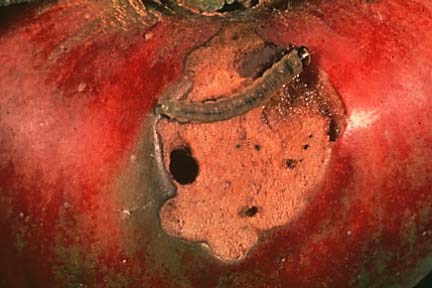
BMSB Adult and Late Season Apple Injury

Sunday, 22 August 2021

Morning Brew: : Tree Fruit Pest Management Conversations via Zoom. Monday, 6AM, August 22nd, 2021 | The Jentsch Lab

Grab your coffee and join in the discussion from home or tractor seat.[/caption]
Hudson Valley Research Laboratory entomologist, Peter Jentsch, friends and guests invite you to join in discussions on Tree Fruit Pest Management from 6-7AM each Monday morning through the season via Zoom. The Zoom meeting site will open at 5:45AM for you to link into the meeting and get your coffee. We’ll start the agenda at 6AM.

Join in or simply listen to whats ahead form the coming week.

Agenda:
Welcome
-Recent weather, forecasts, tree phenology
-Application windows, pest management scouting, models for predicting management.
Diseases:
Bitter Rot, Powdery Mildew, Black Rot, Sooty Blotch / Flyspeck

Insects:
-Insect insect life stages & management during 5-6th cover:

* Apple Maggot
* Codling Moth infestation 3rd generation (Sept.)
* Plum Curculio Adult Summer Feeding
* Two Spotted Spider Mite
* Wooly Apple Aphid decline
* Black Stem Borer: Seasonal presence, 2nd generation increase
* Stink Bug Complex: Brown Marmorated Stink Bug Update

Beginning Steps…
A. Download Zoom on your computer, pad or phone devise you will use for the meeting.
B. Follow the prompts for software setup.

Meeting steps…
1. Join Zoom Meeting by clicking on or pasting the link into your browser:
https://us02web.zoom.us/j/4592490857?pwd=UzVMeTcvWHAyejhHZFA2MFZPbm1WUT09

Meeting ID: 459 249 0857
Passcode: pQ9St9

2. Or open Zoom software, copy and paste the Meeting ID: 930 4781 5060
Important…The meeting link may change every week as needed. Link on the most updated weekly email blog invitation.

Rules:
1. Let’s cover the basics of the days agenda, then open the floor for conversation.

2. All microphones will me muted as you enter the Zoom meeting. Please keep your mic muted during the meeting until you’re ready to join the conversation.

When you’re ready to join the conversation, un-mute your microphone and join in.

See you then

Monday, 9 August 2021

Section 18 EPA Approval for Bifenthrin for BMSB Management. Stink bug populations very low in traps in Hudson Valley Orchards. August 9th, 2020 | The Jentsch Lab

BMSB Adult and Late Season Apple Injury

This season we are experiencing a surprisingly low number and likely late start to the emergence, egg laying and nymph development of the invasive brown marmorated stink bug (BMSB) given the early maturity of fruit this year. Scouting for the insect in trees has shown very few BMSB nymphs in mid-late stages of development with adults at the onset of emergence. That said, we have not yet seen threshold numbers in commercial orchards in Tedders or sticky card traps.

The presence of eggs and early instar nymphs found over the next few weeks may indicate the development of a second generation of BMSB this season. If this occurs we will begin to see high numbers of BMSB moving into crops at which point orchard management for the pest should begin.

Insecticide tools with various degrees of efficacy for BMSB management.

One of the most effective tools for use to manage BMSB is the active ingredient bifenthrin in a number of formulations.

Bifenthrin has a 12 hr. re-entry interval, 14 day pre-harvest interval and a 30 day re-application interval.

We received notice by the EPA that they approved the Section 18 application for bifenthrin for use against the brown marmorated stink bug for 2020. Links below provide access to PDF copies of the Section 18 labels for materials containing the A.I. bifenthrin.

Labels should be made available to the applicator during bifenthrin applications. These can be printed or available as digital files such as PDF’s on tablets or smart phones. Approved a for for use in apple, peach and nectarines in 2020, the exemption is valid now through October 15th as a “Section 18 EXEMPTION, FOR DISTRIBUTION AND USE ONLY IN Columbia, Dutchess, Orange, Ulster, Monroe, Orleans, Wayne and Niagara Counties this year. Use in any other counties is prohibited. in New York State”.

Bifenture 10DF Insecticide/Miticide (EPA Reg. No. 70506‐227)

Bifenture®EC Agricultural Insecticide (EPA Reg.No.70506‐57)

Brigade WSB (EPA REG. NO. 279-3108)

Sunday, 8 August 2021

Morning Brew: : Tree Fruit Pest Management Conversations via Zoom. Monday, 6AM, August 9th, 2021 | The Jentsch Lab

Grab your coffee and join in the discussion from home or tractor seat.[/caption]

Hudson Valley Research Laboratory entomologist, Peter Jentsch, friends and guests invite you to join in discussions on Tree Fruit Pest Management from 6-7AM each Monday morning through the season via Zoom. The Zoom meeting site will open at 5:45AM for you to link into the meeting and get your coffee. We’ll start the agenda at 6AM.

Join in or simply listen to whats ahead form the coming week.
Agenda:
Welcome
-Recent weather, forecasts, tree phenology
-Application windows, pest management scouting, models for predicting management.
Diseases:
Bitter Rot, Powdery Mildew, Black Rot, Sooty Blotch / Flyspeck

Insects:
-Insect insect life stages & management during 5-6th cover:
* Plum Curculio Adult Summer Feeding
* Apple Maggot
* Codling Moth infestation
* Obliquebanded Leafroller 2nd generation
* European Red Mite & Two Spotted Spider Mite
* Wooly Apple Aphid: Predators / Biological Control Impact
* Black Stem Borer: Seasonal presence, 2nd generation increase
* Stink Bug Complex: Brown Marmorated Stink Bug Update / Samurai Wasp

Beginning Steps…
A. Download Zoom on your computer, pad or phone devise you will use for the meeting.
B. Follow the prompts for software setup.

Meeting steps…
1. Join Zoom Meeting by clicking on or pasting the link into your browser:
https://us02web.zoom.us/j/4592490857?pwd=UzVMeTcvWHAyejhHZFA2MFZPbm1WUT09

Meeting ID: 459 249 0857
Passcode: pQ9St9

2. Or open Zoom software, copy and paste the Meeting ID: 930 4781 5060
Important…The meeting link may change every week as needed. Link on the most updated weekly email blog invitation.

Rules:
1. Let’s cover the basics of the days agenda, then open the floor for conversation.

2. All microphones will me muted as you enter the Zoom meeting. Please keep your mic muted during the meeting until you’re ready to join the conversation.

When you’re ready to join the conversation, un-mute your microphone and join in.

See you then

Sunday, 1 August 2021

Morning Brew: : Tree Fruit Pest Management Conversations via Zoom. Monday, 6AM, August 2nd, 2021 | The Jentsch Lab

Grab your coffee and join in the discussion from home or tractor seat.[/caption]

Hudson Valley Research Laboratory entomologist, Peter Jentsch, friends and guests invite you to join in discussions on Tree Fruit Pest Management from 6-7AM each Monday morning through the season via Zoom. The Zoom meeting site will open at 5:45AM for you to link into the meeting and get your coffee. We’ll start the agenda at 6AM.

Join in or simply listen to whats ahead form the coming week.
Agenda:
Welcome
-Recent weather, forecasts, tree phenology
-Application windows, pest management scouting, models for predicting management.
Diseases:
Bitter Rot, Powdery Mildew, Black Rot, Sooty Blotch / Flyspeck

Insects:
-Insect insect life stages & management during 5-6th cover:
* Apple Maggot emergence building in high pressure blocks
* Codling Moth 2nd generation
* Obliquebanded Leafroller 2nd generation
* European Red Mite & Two Spotted Spider Mite
* Wooly Apple Aphid: Predators / Biological Control Present
* Black Stem Borer: Seasonal presence, 2nd generation increase
* Stink Bug Complex: Brown Marmorated Stink Bug Update / Samurai Wasp

Beginning Steps…
A. Download Zoom on your computer, pad or phone devise you will use for the meeting.
B. Follow the prompts for software setup.

Meeting steps…
1. Join Zoom Meeting by clicking on or pasting the link into your browser:
https://us02web.zoom.us/j/4592490857?pwd=UzVMeTcvWHAyejhHZFA2MFZPbm1WUT09

Meeting ID: 459 249 0857
Passcode: pQ9St9

2. Or open Zoom software, copy and paste the Meeting ID: 930 4781 5060
Important…The meeting link may change every week as needed. Link on the most updated weekly email blog invitation.

Rules:
1. Let’s cover the basics of the days agenda, then open the floor for conversation.

2. All microphones will me muted as you enter the Zoom meeting. Please keep your mic muted during the meeting until you’re ready to join the conversation.

When you’re ready to join the conversation, un-mute your microphone and join in.

See you then

Thursday, 29 July 2021

Anchors Away: Keeping High Density Tree Fruit Support Systems From Failing | The Jentsch Lab

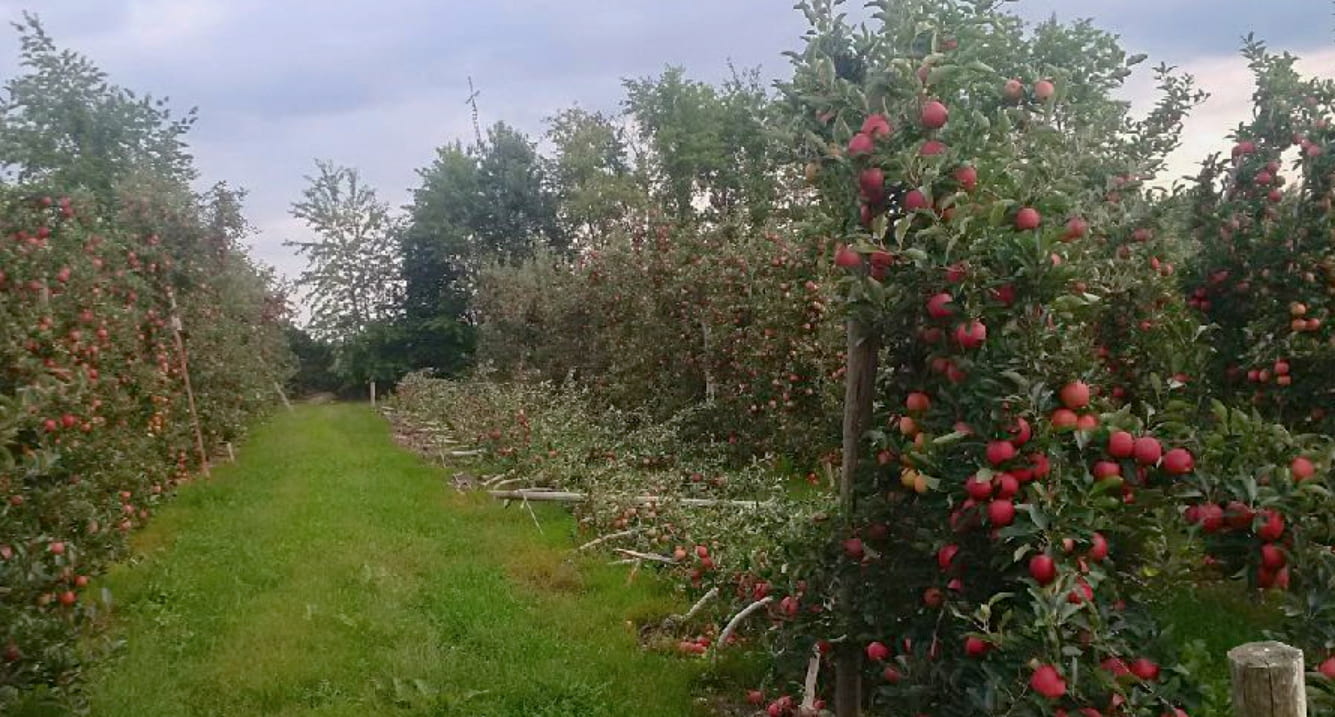
Brief: The crop load of many varieties appears to be robust in most orchards this season. Predictions are for a strong crop in the Hudson Valley with many blocks exceeding 1000 bushels to the acre are forecast. In tall spindle systems with trees in their 4th leaf and older, many growers are pushing the upper limits of support systems designed for a 10′ tall tree. At 12′ to 14′ row spacing, gaining an additional 5-15% fruit load above the top wire is enticing but not without considerable stress. Without additional support in years with a heavy crop, these systems are increasingly at risk for failure, most especially in August through harvest during hurricane season.

Over the past 4 weeks we have had 6.6′ rain in the mid Hudson Valley, over 2.2″ above the average of 4.4″ (Poughkeepsie Airport data). Many orchards have standing water and soil nearing saturation. With another 1″ forecast today and winds expected to exceed 20 mph posts are in water logged soils. Continued rainfall, albeit at lower rates, are expected through Sunday. Under conditions such as what we are now experiencing, and anticipating 21 mph winds over the next 8 hours, the added crop load above the top wire of support systems and very wet soils may cause significant stress to the system. If we add to this significantly higher winds, many systems could begin to fail and systems topple. Added support by way of posts to the top wire should be considered if you find your orchard in this situation.

Introduction: As hurricane season is upon us, tree fruit growers should continue monitoring the weather pattern to determine the need to reinforce high density production systems. Shoring up anchors, tightening up wire and adding in-line support should be strongly considered if foul weather predictions increase in probability.

System Failure and Support:
(Excerpts from Anna Wallis & Dan Donahue)

Stress Factors
• Heavy rain and high winds
• Heavier than average crop
• Fruit size has increased dramatically due to recent rains and favorable temperatures
• Some mature tall spindle blocks have become too tall for the supporting trellis structure.
• Undersized support posts (even if they are closely spaced)
• Ineffective anchor systems
• Trellis wire(s) not adequately tensioned
• While it may seem that trellis on hillsides would be most vulnerable, this is not necessarily the case. The quality of trellis construction, stability of the underlying soil, strength of prevailing winds, deviation of the trellis structure from true vertical (plumb), and the extent that trees have been allowed to grow beyond the top wire are more important considerations. Trellis’s fail on perfectly flat sites if the forces acting on the structure move from vertical towards horizontal.

Stress Failures
• Anchors giving away in soft ground
• Trellis posts giving away in soft ground
• Trellis posts snapping at the base
• Top wire breading under load (not very common)

Quick Fixes to Shore Up a Weak Trellis System
• Identify your weakest, at risk trellis systems.
o Inspect anchors
o Check for broken posts & heaving posts
o Check wire tension
• Re-set weak anchors or reinforce with some heavy weight (large block, equipment, etc.)
• Set 2”x6” studs as crutches on leaning posts to reduce sideways movement
• Re-tension trellis wires, starting with the top wire (as long as the anchors can handle it)
• Tie off the top of a failing post to a stronger post on the opposite the direction of movement. Tying off to the base of the post in the adjacent row would be strongest, but will effectively block that row middle to wheeled traffic, and could be dangerous if not very well marked with high-visibility flagging. It would be best to entirely block traffic from the affected row middle.

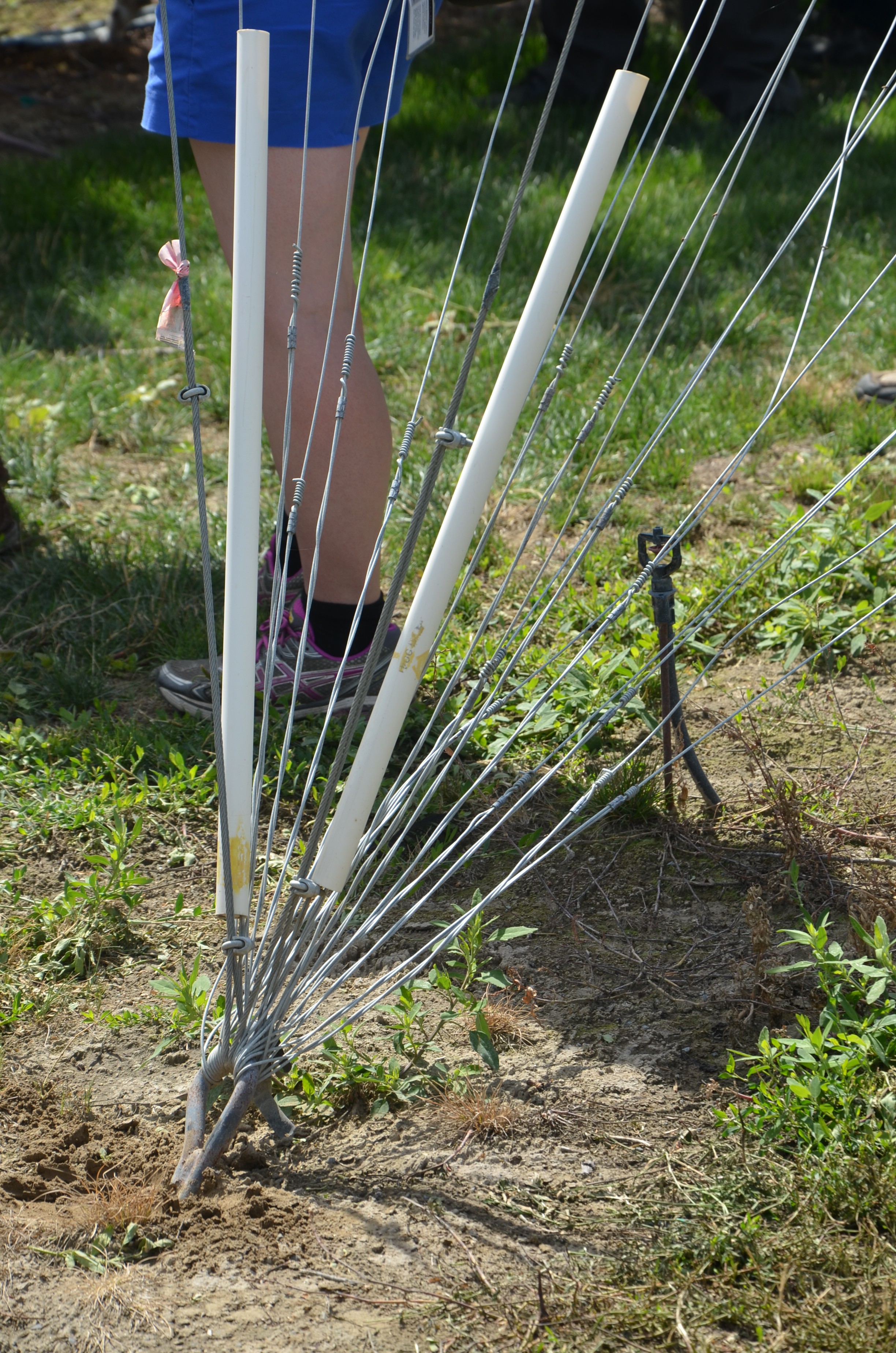
Concrete anchors (buried) used to support end posts.
Use of heavy gauge wire for system support
Increasing Post Length for Higher Canopy Yield.

Monday, 26 July 2021

Mid-Late Season Woolly Apple Aphid Management: July 26th, 2021 | The Jentsch Lab

Brief: Increasing populations of Woolly Apple Aphid (WAA) have been observed this morning, most problematic in Fuji apple in Orange County. The aphid feeds on the sap from plants, excreting or ‘shunting’ excess and concentrated sap will act as a substrate for sooty mold while high infestations can colonize the calyx end of fruit becoming problematic at harvest.

The WAA tends to be a sporadic pest in orchards in the northeastern United States, occurring in high numbers only every few years. However, through the use of pyrethroids for the control of the brown marmorated stink bug we are seeing frequent and high infestations of this insect pest on apple over the past few years. Since the WAA is frequently parasitized by Aphelinus mali, a tiny wasp that is also native to North America, the use of pyrethroids late in the season have likely reduced the biological control provided by this important parasitoid.

If you are seeing WAA in commercial blocks, management may be required to reduce the insect colony, most importantly to reduce honeydew created by the pest along with the white cottony fibers to assure the fruit is commercially acceptable. As we move through to harvest, the use of short PHI materials (7 day or lower), effective at reducing the population may be required over the next few weeks.

Early intervention, prior to heavy infestation levels at harvest, is critical in fresh fruit production.

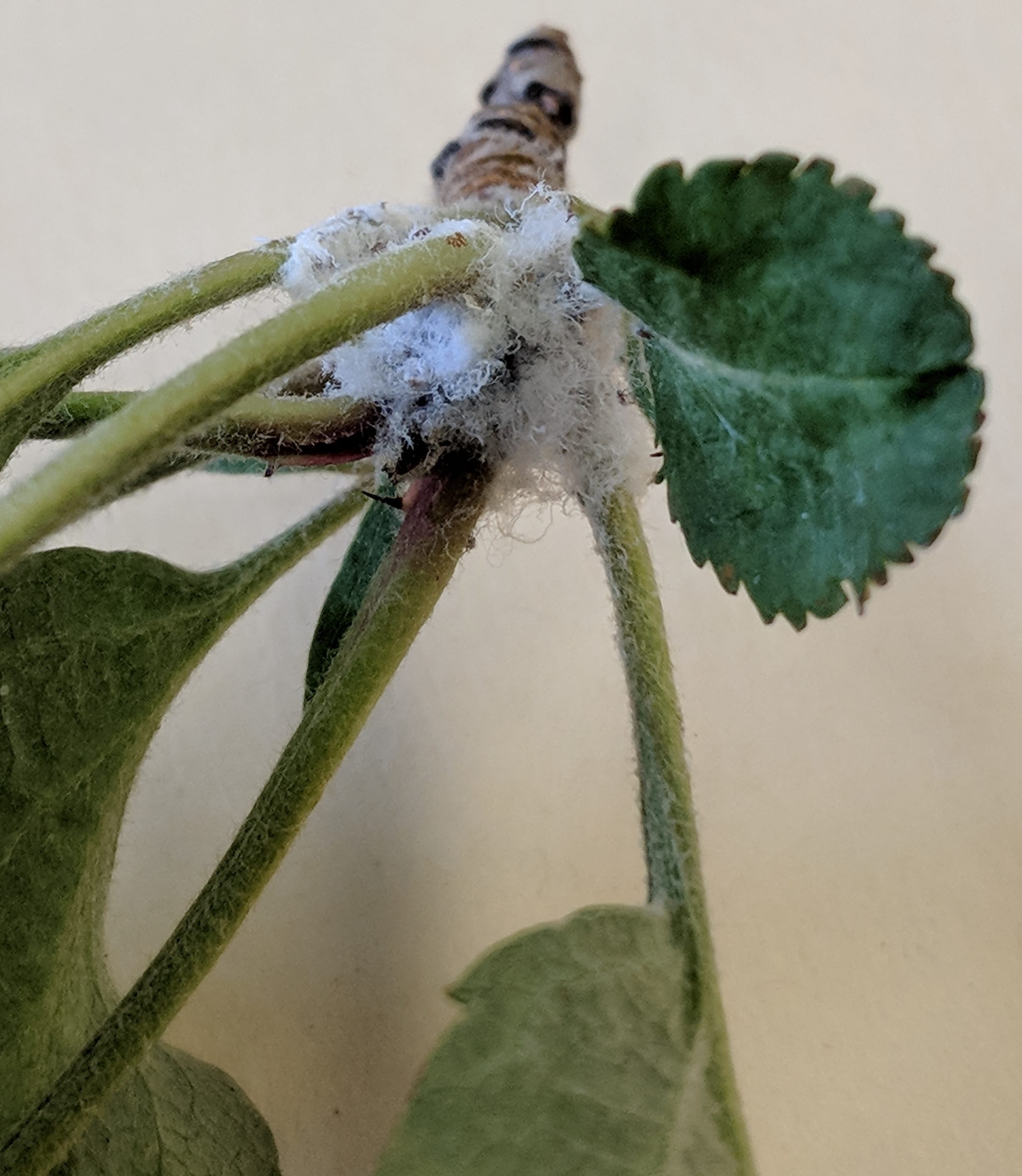
Wooly Apple Aphid Arial Colony on Commercial Fuji

Introduction:
Biology: Reportedly native to North America, occurs in most apple-growing areas of the world. The WAA feeds mainly on apple, but can also be found on pear, quince, mountain ash, hawthorn, and Cottoneaster. Its reproduction on these hosts is asexual (parthenogenetic). Sexual reproduction has been thought to occur only when elm grows in close proximity to the other host plants. The portion of the life cycle occurring on elm has become more doubtful and less important than in the past, since most elms have disappeared from Eastern forests because of Dutch Elm Disease. The WAA tends to be a sporadic pest in orchards in the northeastern United States, occurring in noticeably high numbers only every few years.

Management: of the WAA should include higher volume applications (>100 GPA) then what would be used for apple maggot and codling moth. The waxy covering protecting the insect from desiccation necessitates the use of a penetrant, providing more effective access to directed contact of the active ingredient to the developing WAA colony. Few insecticides are labeled and effective for use in NYS.

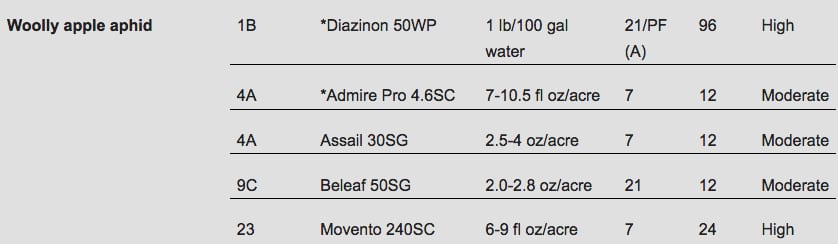
PHI will dictate the use of material choice nearing harvest. Diazinon (High degree of control) and Beleaf 50SG (Moderate Control) having a 21 day PHI. Movento 240 SC, also very effective earlier in the season, takes time for systemic activity to occur with late season applications in September. This insecticide may have greater challenges for uptake and distribution later in the season as sunlight and temperature decrease. Admire Pro 4.6SC and Assail 30SG are two options that should also be considered based on the 7 day PHI. Other products such as horticultural oils (Pure Spray, Bio-Cover) and soap (M-Pede; Gowan) may be options for conventional and organic growers requiring zero days to harvest (0 PHI), yet may prove challenging if high temperature or slow drying conditions prevail so as to cause fruit russett or phytotoxicity on susceptible varieties.

Note: Mixing formulations of diazinon or Danitol with Captan or Captec have caused crop injury in the past. Therefore, diazinon and Captan formulations should not be tank-mixed. This type of phytotoxicity results from either a direct interaction of the active ingredients or an interaction of the “inert” ingredients in one formulation that enhances the toxicity of the other one. (reference from Dr. Dave Rosenberger, Win Cowgill et. al.)

WAA Infestation of Pruning Cuts.

Life Cycle: The majority of nymphs are borne alive on apple trees by the un-mated female. The WAA nymph passes through four instars, changing in size from 0.6 mm (.02 in.) long in the first to 1.3 mm (.05 in.) long in the fourth instar. The nymphs are dark reddish-brown with a bluish-white waxy covering that becomes more extensive in the later instars. The first instar nymphs (crawlers), which are considerably more active than later instars, are a dispersal stage. They initiate aerial colonies in the spring from overwintering root infestations. The crawlers are carried by wind from tree to tree within an orchard or nursery, or move downward from the branches to initiate colonies on roots.

Damage: Cottony-white aerial colonies are found most frequently on succulent tissue, such as current season’s growth, water sprouts, unhealed pruning wounds, or cankers. Heavy infestations can cause honey dew and sooty mold on the fruit, and galls on the plant parts. Underground colonies may be found throughout the year on the root systems of orchard trees or nursery stock. Severe root infestations can stunt or kill young trees, but usually cause little damage to mature trees. WAA can also transmit perennial apple canker, Pezicula malicorticis Jacks.

Biological Control of WAA by Aphelinus mali
Biological Control: The WAA is frequently parasitized by Aphelinus mali, a tiny wasp that is also native to North America. Parasitized aphids appear as black mummies in the colony. A. mali has been successfully introduced to many apple-growing areas of the world, and is providing adequate control of the WAA in several areas. It does not provide sufficient control in commercial orchards in the northeastern United States because of its sensitivity to many commonly used insecticides; however, the wasp is thought to reduce WAA populations in abandoned orchards. Because the woolly apple aphids are somewhat protected by their waxy covering, regular spray programs may not provide adequate control. High volume applications of recommended insecticides may be necessary to penetrate the wax. Failure to control aerial infestations can result in underground infestations on susceptible rootstocks. Chemical control of root infestations is not possible; resistant rootstocks provide the only defense against underground infestations.

Rootstock Susceptability: Failure to control aerial infestations can result in underground infestations on susceptible rootstocks. Chemical control of root infestations is not possible; resistant rootstocks provide the only defense against underground infestations. The Mailing-Merton (MM) rootstock series was developed to provide resistance to WAA infestation. The M-9 series, M-26, M-27 are all susceptible to WAA. Its reproduction on these hosts is primarily parthenogenetic, that is reproduction without mating.

More on Management:
Diazinon is an excellent material against the WAA. . It is principally used prebloom for control of San Jose scale or postbloom for broad-spectrum control of major pests. It is generally less persistent than other standard phosphates. This insecticide has caused russeting or related finish problems on Golden Delicious, R.I. Greening, and Baldwin. No injury has been reported on McIntosh or closely related varieties yet only limited observations have been made on other varieties. Note that the material should not be used in tank mix with Captan under slow drying conditions, strong acids & alkalis and copper-containing compounds.

Spirotetramat (Movento) is a tetramic acid registered for the control of a number of indirect pests in pome fruits and stone fruits, primarily aphids (including woolly apple aphid), mealybugs, pear psylla, and San Jose scale. It has systemic activity, exhibiting 2-way movement in the plant, both upwards in the xylem to new shoots and leaves, and downwards in the pholem to the root tissues. Its mode of action is as a Lipid Biosynthesis Inhibitor (LBI), and it is active by ingestion against immature insects feeding on treated plants. Additionally, adult females have exhibited reduced fecundity and offspring survival.

Acetamiprid (Assail) belongs to the neonicotinoid group of insecticides (along with *AdmirePro and *†Actara). It was registered by the US EPA under the reduced risk pesticide policy and is considered a replacement for older OP insecticides. Assail has a spectrum of effectiveness across several insect groups, and is active against pests such as plum curculio, apple maggot, internal leps, aphids, leafhoppers, leafminers, San Jose scale, European apple sawfly and mullein plant bug, plus pear pests such as pear psylla and Comstock mealybug.

Imidacloprid (*Admire Pro, *Leverage) is a broad spectrum contact and locally systemic chloronicotinyl insecticide with low mammalian toxicity. It is primarily effective against aphids, whiteflies, thrips, scales (crawlers), pyslla, leafhoppers, mealybugs, some beetle and weevil species, and leafminers. The original *Provado formulation has been replaced by *AdmirePro, which is labeled on pome and stone fruits for aphids (except woolly apple aphid), leafminers, leafhoppers, San Jose scale, pear psylla, mealybug, Japanese beetle, cherry fruit flies and San Jose scale. It has also shown activity against pear midge when applied at petal fall. It is additionally labeled for use as a soil-applied product against woolly apple aphid. This material has no effect on any mites, beneficial or phytophagous, but is hard on Stethorus. Mite flare-up is often associated with use of Imidacloprid during the season.

Flonicamid (Beleaf) is labeled against aphids and plant bugs in NY for pome fruit and stone fruit; the label classifies it as a member of the pyridinecarboxamide family, an IRAC Section 9C material, which is defined as “Unknown or non-specific mode of action – selective feeding blockers”. It has not been tested in NY field trials, but other researchers have reported good efficacy against green peach aphid and tarnished plant bug in peaches. The label also lists apple aphid, black cherry aphid, rosy apple aphid, spirea aphid and woolly apple aphid. It has a low bee poisoning hazard.

Sunday, 25 July 2021

Morning Brew: : Tree Fruit Pest Management Conversations via Zoom. Monday, 6AM, July 26th, 2021 | The Jentsch Lab

Grab your coffee and join in the discussion from home or tractor seat.[/caption]
Hudson Valley Research Laboratory entomologist, Peter Jentsch, friends and guests invite you to join in discussions on Tree Fruit Pest Management from 6-7AM each Monday morning through the season via Zoom. The Zoom meeting site will open at 5:45AM for you to link into the meeting and get your coffee. We’ll start the agenda at 6AM.

Join in or simply listen to whats ahead form the coming week.
Agenda:
Welcome
-Recent weather, forecasts, tree phenology
-Application windows, pest management scouting, models for predicting management.
Diseases:
Powdery Mildew, Black Rot, Sooty Blotch / Flyspeck

Insects:
-Insect insect life stages & management during 5-6th cover:
* Apple Maggot emergence building in high pressure blocks
* Codling Moth 2nd generation
* European Red Mite & Two Spotted Spider Mite causing bronzing across the region
* Wooly Apple Aphid: Predators / Biological Control Present
* Black Stem Borer: Seasonal presence, 2nd generation increase
* Stink Bug Complex: Brown Marmorated Stink Bug Update / Samurai Wasp

Beginning Steps…
A. Download Zoom on your computer, pad or phone devise you will use for the meeting.
B. Follow the prompts for software setup.

Meeting steps…
1. Join Zoom Meeting by clicking on or pasting the link into your browser:
https://us02web.zoom.us/j/4592490857?pwd=UzVMeTcvWHAyejhHZFA2MFZPbm1WUT09

Meeting ID: 459 249 0857
Passcode: pQ9St9

2. Or open Zoom software, copy and paste the Meeting ID: 930 4781 5060
Important…The meeting link may change every week as needed. Link on the most updated weekly email blog invitation.

Rules:
1. Let’s cover the basics of the days agenda, then open the floor for conversation.

2. All microphones will me muted as you enter the Zoom meeting. Please keep your mic muted during the meeting until you’re ready to join the conversation.

When you’re ready to join the conversation, un-mute your microphone and join in.

See you then

Tuesday, 20 July 2021

Codling Moth: 2nd Generation Begins. July 19th, 2021 | The Jentsch Lab

‘Summertime….and the living is easy’; with exceptions made for fruit growers.

Brief: The second of potentially three generations of Codling Moth (CM) Order Lepidoptera, Family Tortricidae is beginning this week with adult emergence and flight, occurring on the 18th July (Biofix). Egg laying and larval hatch is expected within the next 10-14 days. Apple Maggot have been on the wing since mid-June, reaching threshold in some blocks. Applications for Apple Maggot has already begun in many orchards based on yellow card or red sphere thresholds. Japanese beetle have been increasing in numbers with fruit feeding observed in Ginger Gold and HoneyCrisp. Increasing presence of wooly apple aphid will also need to be addressed in many orchards as they move from canopy into fruit clusters. The increasing canopy and presence of colonies within fruit clusters will further conceal these pests, management then becoming more of a challenge as we near harvest.

Insecticides for codling moth management (CALS PMEP Guidelines)

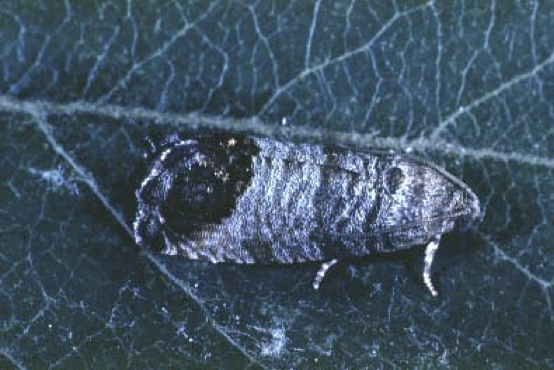
Adult codling moth
Adult codling moth

Introduction: Our ‘Scouting Report on Codling Moth Pheromone Trap Captures’ show increasing flight of the adult males beginning late last week. As of Monday July 19th, the degree day developmental model for 2nd generation codling moth predicts adult emergence at 6% at the Hudson Valley Research Laboratory. The adults are now mating, with egg laying and larva hatch to begin in the mid-Hudson Valley orchards within the next 10-14 days depending on predicted vs actual temperatures.

Each orchard is unique. To determine the presence of CM in your orchard hang at least 1 trap per 10 acre orchard block at the top of the canopy, specifically in blocks in which historic internal lep. damage has occurred. Cornell suggested trap threshold for CM: If > 5 codling moths are caught per trap per week using standard lures, there can be problems in fruit from the upcoming generation. High trap counts are a signal to prepare for CM management. If trap counts continue to exceed threshold throughout the season, maintain insecticide coverage on a 2 week interval. Each generation will require insecticide residue during the period beginning at 1st to completed egg hatch to control the early and most vulnerable stage of larva.

When scouting for fruit injured from the previous 1st generation in late June into July, look for frass at the calyx end of the fruit and or red ringed entry holes along the cheek and shoulder of fruit, often with frass. If you cut open CM injured fruit prior to larval emergence from the fruit, you are likely to find the larva within the carpel seed cavity with seeds partially eaten, nestled in dark brown frass. Core feeding from lesser apple worm and Oriental Fruit Moth larva will not result in seed feeding. San Jose scale also produce a red ring from feeding, however, there will be no hole or frass from SJS.

If populations of CM reside within the orchard or if adults migrate in from abandoned trees along the borders, they are likely to give rise to damaging populations this week. Trapping in your orchard is the best way to determine presence of the insect. Generally, we are seeing very high incidence of CM injury in untreated and organic treated fruit this season with 1st generation resulting in 2-4% in untreated Macoun. Red delicious are a favored variety with CM infesting most available, untreated fruit. We have been hearing from many New England growers regarding an increase in fruit injury from internal worms over the past few years.

Since apple maggot has now reached threshold in high pressure blocks, the selection of management tools to control both codling moth and apple maggot are in order. The neonicotinoid Assail is very effective against both apple maggot and codling as are many other insecticide tools.

Assail used only for CM management can be used effectively at lower rates (4-8 oz./A). However, for AM management, rates should be at the 8.0 oz./A. Restrictions for Assail include:

• Do not make more than 4 applications per season.
• Do not apply more than once every 12 days.
• Do not apply less than 7 days before harvest (PHI = 7 days).
• Do not exceed a total of 0.60 lbs. active ingredient (32.0 ozs. product) per acre
per growing season.

Keep in mind that neonicotinoids provide low mortality to kill the fly as the insect is not likely to ingest the material. (Dr. Reissig provides excellent research on this topic)

Assail does have excellent repellency to keep the fly from stinging the fruit and curative activity in killing the larva providing levels of clean fruit when trialed with OP’s. (See John Wise comments on this topic).

Imidan (Phosmet) is also very effective against both CM & AM. Although Am can be managed with lower rates, CM management should incorporate the high labeled rate.

The pyrethroid group and pre-mix formulations with a pyrethroid will also perform well against this complex.

On some farms in the mid-Hudson Valley, including Highland, Milton and Marlboro, consideration to control the stink bug complex, including the Brown Marmorated Stink Bug (BMSB) would employ a pre-mix or Bifenthrin to manage this additional pest in August.

Insecticide tools with various degrees of efficacy for BMSB management.

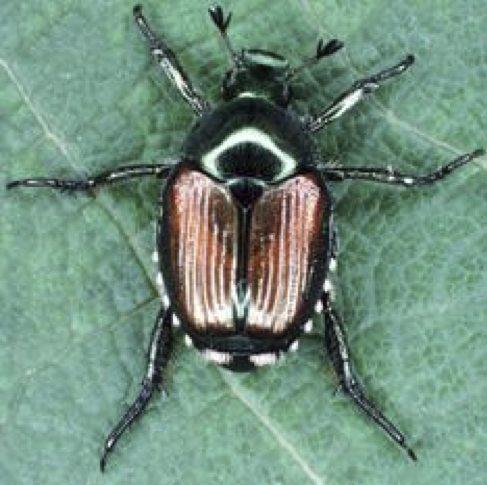
Japanese beetle adult.
We observed the first emergence of Japanese beetle, Popillia japonica over the past two week beginning 4th July in the lower Hudson Valley. However the emergence has been in many sites clustered in small locations and lackluster in numbers compared to previous growing seasons with relatively few beetles causing damage to fruit trees up to this point. Injury to Honeycrisp and Gingergold has been observed last week.

Many of the insecticides used to manage apple maggot (such as the OP’s pyrethroids, Delegate & Entrust) will likely reduce foliar & fruit feeding by the June beetle complex.

Saturday, 17 July 2021

Morning Brew: : Tree Fruit Pest Management Conversations via Zoom. Monday, 6AM, July 19th, 2021 | The Jentsch Lab

Grab your coffee and join in the discussion from home or tractor seat.[/caption]

Hudson Valley Research Laboratory entomologist, Peter Jentsch, friends and guests invite you to join in discussions on Tree Fruit Pest Management from 6-7AM each Monday morning through the season via Zoom. The Zoom meeting site will open at 5:45AM for you to link into the meeting and get your coffee. We’ll start the agenda at 6AM.

Join in or simply listen to whats ahead form the coming week.
Agenda:
Welcome
-Recent weather, forecasts, tree phenology
-Application windows, pest management scouting, models for predicting management.
Diseases:
Powdery Mildew, Black Rot, Sooty Blotch / Flyspeck

Insects:
-Insect insect life stages & management during 4-5th cover:
* Apple Maggot emergence building in high pressure blocks
* Codling Moth 2nd generation (mid-July Model)
* European Red Mite & Two Spotted Spider Mite causing bronzing across the region
* Spotted Tentiform Leafminer, Aphid Complex, Potato Leafhopper
* Wooly Apple Aphid: Predators / Biological Control Present
* Black Stem Borer: Seasonal presence, 2nd generation increase

Beginning Steps…
A. Download Zoom on your computer, pad or phone devise you will use for the meeting.
B. Follow the prompts for software setup.

Meeting steps…
1. Join Zoom Meeting by clicking on or pasting the link into your browser:
https://us02web.zoom.us/j/4592490857?pwd=UzVMeTcvWHAyejhHZFA2MFZPbm1WUT09

Meeting ID: 459 249 0857
Passcode: pQ9St9

2. Or open Zoom software, copy and paste the Meeting ID: 930 4781 5060
Important…The meeting link may change every week as needed. Link on the most updated weekly email blog invitation.

Rules:
1. Let’s cover the basics of the days agenda, then open the floor for conversation.

2. All microphones will me muted as you enter the Zoom meeting. Please keep your mic muted during the meeting until you’re ready to join the conversation.

When you’re ready to join the conversation, un-mute your microphone and join in.

See you then

Sunday, 11 July 2021

Morning Brew: : Tree Fruit Pest Management Conversations via Zoom. Monday, 6AM, July 12th, 2021 | The Jentsch Lab

Grab your coffee and join in the discussion from home or tractor seat.[/caption]

Hudson Valley Research Laboratory entomologist, Peter Jentsch, friends and guests invite you to join in discussions on Tree Fruit Pest Management from 6-7AM each Monday morning through the season via Zoom. The Zoom meeting site will open at 5:45AM for you to link into the meeting and get your coffee. We’ll start the agenda at 6AM.

Join in or simply listen to whats ahead form the coming week.
Agenda:
Welcome
-Recent weather, forecasts, tree phenology
-Application windows, pest management scouting, models for predicting management.
Diseases:
Powdery Mildew, Black Rot, Sooty Blotch / Flyspeck

Insects:
-Insect insect life stages & management during 4-5th cover:
* Apple Maggot emergence building in high pressure blocks
* Codling Moth 2nd generation (mid-July Model)
* Obliquebanded Leafroller: mid-emergence
* European Red Mite & Two Spotted Spider Mite causing bronzing across the region
* Spotted Tentiform Leafminer, Aphid Complex, Potato Leafhopper
* Wooly Apple Aphid: Predators / Biological Control Present
* European Corn Borer: 1st generation emergence
* Black Stem Borer: Seasonal presence, 2nd generation increase

Beginning Steps…
A. Download Zoom on your computer, pad or phone devise you will use for the meeting.
B. Follow the prompts for software setup.

Meeting steps…
1. Join Zoom Meeting by clicking on or pasting the link into your browser:
https://us02web.zoom.us/j/4592490857?pwd=UzVMeTcvWHAyejhHZFA2MFZPbm1WUT09

Meeting ID: 459 249 0857
Passcode: pQ9St9

2. Or open Zoom software, copy and paste the Meeting ID: 930 4781 5060
Important…The meeting link may change every week as needed. Link on the most updated weekly email blog invitation.

Rules:
1. Let’s cover the basics of the days agenda, then open the floor for conversation.

2. All microphones will me muted as you enter the Zoom meeting. Please keep your mic muted during the meeting until you’re ready to join the conversation.

When you’re ready to join the conversation, un-mute your microphone and join in.

See you then

Sunday, 4 July 2021

Morning Brew: : Tree Fruit Pest Management Conversations via Zoom. Monday, 6AM, July 5th, 2021 | The Jentsch Lab

Grab your coffee and join in the discussion from home or tractor seat.[/caption]

Hudson Valley Research Laboratory entomologist, Peter Jentsch, friends and guests invite you to join in discussions on Tree Fruit Pest Management from 6-7AM each Monday morning through the season via Zoom. The Zoom meeting site will open at 5:45AM for you to link into the meeting and get your coffee. We’ll start the agenda at 6AM.

Join in or simply listen to whats ahead form the coming week.
Agenda:
Welcome
-Recent weather, forecasts, tree phenology
-Application windows, pest management scouting, models for predicting management.
Diseases:
Powdery Mildew, Black Rot, Sooty Blotch / Flyspeck
Insects:
-Insect insect life stages & management during 4-5th cover:
* Apple Maggot emergence building in high pressure blocks
* Codling Moth 2nd generation (mid-July Model)
* Obliquebanded Leafroller: mid-emergence
* European Red Mite & Two Spotted Spider Mite causing bronzing across the region
* Spotted Tentiform Leafminer, Aphid Complex, Potato Leafhopper
* Wooly Apple Aphid
* European Corn Borer: 1st generation emergence
* Black Stem Borer: Seasonal presence, 2nd generation increase

Beginning Steps…
A. Download Zoom on your computer, pad or phone devise you will use for the meeting.
B. Follow the prompts for software setup.

Meeting steps…
1. Join Zoom Meeting by clicking on or pasting the link into your browser:
https://us02web.zoom.us/j/4592490857?pwd=UzVMeTcvWHAyejhHZFA2MFZPbm1WUT09

Meeting ID: 459 249 0857
Passcode: pQ9St9

2. Or open Zoom software, copy and paste the Meeting ID: 930 4781 5060
Important…The meeting link may change every week as needed. Link on the most updated weekly email blog invitation.

Rules:
1. Let’s cover the basics of the days agenda, then open the floor for conversation.

2. All microphones will me muted as you enter the Zoom meeting. Please keep your mic muted during the meeting until you’re ready to join the conversation.

When you’re ready to join the conversation, un-mute your microphone and join in.

See you then

Sunday, 27 June 2021

Morning Brew: : Tree Fruit Pest Management Conversations via Zoom. Monday, 6AM, June 28th, 2021 | The Jentsch Lab

Grab your coffee and join in the discussion from home or tractor seat.[/caption]
Hudson Valley Research Laboratory entomologist, Peter Jentsch, friends and guests invite you to join in discussions on Tree Fruit Pest Management from 6-7AM each Monday morning through the season via Zoom. The Zoom meeting site will open at 5:45AM for you to link into the meeting and get your coffee. We’ll start the agenda at 6AM.

Join in or simply listen to whats ahead form the coming week.
Agenda:
Welcome
-Recent weather, forecasts, tree phenology
-Application windows, pest management scouting, models for predicting management.
Diseases:
Powdery Mildew, Black Rot, Sooty Blotch / Flyspeck
Insects:
-Insect insect life stages & management during 3-4th cover cover:
* Apple Maggot emergence & threshold in high pressure blocks
* Codling Moth Emergence: B Peak emergence ended
* Obliquebanded Leafroller: mid-emergence
* European Red Mite & Two Spotted Spider Mite
* Rosy Apple Aphid, Green Aphid Complex, Potato Leafhopper
* Wooly Apple Aphid
* Dogwood Borer egg laying & larval emergence
* European Corn Borer: 1st generation emergence
* Black Stem Borer: Seasonal presence, 1st generation decline

Beginning Steps…
A. Download Zoom on your computer, pad or phone devise you will use for the meeting.
B. Follow the prompts for software setup.

Meeting steps…
1. Join Zoom Meeting by clicking on or pasting the link into your browser:
https://us02web.zoom.us/j/4592490857?pwd=UzVMeTcvWHAyejhHZFA2MFZPbm1WUT09

Meeting ID: 459 249 0857
Passcode: pQ9St9

2. Or open Zoom software, copy and paste the Meeting ID: 930 4781 5060
Important…The meeting link may change every week as needed. Link on the most updated weekly email blog invitation.

Rules:
1. Let’s cover the basics of the days agenda, then open the floor for conversation.

2. All microphones will me muted as you enter the Zoom meeting. Please keep your mic muted during the meeting until you’re ready to join the conversation.

When you’re ready to join the conversation, un-mute your microphone and join in.

See you then

Saturday, 19 June 2021

Morning Brew: : Tree Fruit Pest Management Conversations via Zoom. Monday, 6AM, June 21st, 2021 | The Jentsch Lab

Grab your coffee and join in the discussion from home or tractor seat.[/caption]

Hudson Valley Research Laboratory entomologist, Peter Jentsch, friends and guests invite you to join in discussions on Tree Fruit Pest Management from 6-7AM each Monday morning through the season via Zoom. The Zoom meeting site will open at 5:45AM for you to link into the meeting and get your coffee. We’ll start the agenda at 6AM.

Join in or simply listen to whats ahead form the coming week.
Agenda:
Welcome
-Recent weather, forecasts, tree phenology
-Application windows, pest management scouting, models for predicting management.
Diseases:
Secondary scab, powdery mildew, black rot, Sooty Blotch / Flyspeck
Insects:
-Insect insect life stages & management during 2-3rd cover:
* Codling Moth Emergence: B Peak emergence
* Obliquebanded Leafroller: Early emergence
* European Red Mite & Two Spotted Spider Mite
* Rosy Apple Aphid, Green Aphid Complex, Potato Leafhopper
* Wooly Apple Aphid & San Jose Scale @ 2C (Emergence Model)
* Dogwood Borer egg laying & larval emergence
* European Corn Borer: 1st generation emergence
* Black Stem Borer: Seasonal presence, 1st generation decline

Beginning Steps…
A. Download Zoom on your computer, pad or phone devise you will use for the meeting.
B. Follow the prompts for software setup.

Meeting steps…
1. Join Zoom Meeting by clicking on or pasting the link into your browser:
https://us02web.zoom.us/j/4592490857?pwd=UzVMeTcvWHAyejhHZFA2MFZPbm1WUT09

Meeting ID: 459 249 0857
Passcode: pQ9St9

2. Or open Zoom software, copy and paste the Meeting ID: 930 4781 5060
Important…The meeting link may change every week as needed. Link on the most updated weekly email blog invitation.

Rules:
1. Let’s cover the basics of the days agenda, then open the floor for conversation.

2. All microphones will me muted as you enter the Zoom meeting. Please keep your mic muted during the meeting until you’re ready to join the conversation.

When you’re ready to join the conversation, un-mute your microphone and join in.

See you then

Aphis & Hopper Arrival: Green Aphid Orchard Explosion June 19th, 2021 | The Jentsch Lab

Brief: The green apple aphid complex (GAA), comprised of green (Aphis pomi) and spiria aphid (Aphis spiraecola), often develop in high numbers during the early summer. This event will occur during the flush growth of new shoots, often initiated after repeated rain events. Succulent foliage on which aphid feed provide an ample source of nitrogen for rapid aphid reproduction.

As of Friday, June 18th GAA were observed feeding on Gala fruit in commercial blocks with high populations developing in rapidly growing shoots.

During scouting efforts we’ve seen GAA populations explode during the past week. Shoots laden with aphids clinging to the undersides of new terminal leaves cause the leaves beneath to drip with ‘honeydew’. In years where populations are high, ‘honeydew’ droplets falling on fruitlets can lead to fruit russetting injury from aphid feeding. Although not expressed immediately, when aphids directly feed on fruit. pocking of the apple will appear later in the season, often showing up during storage, causing the fruit to become unmarketable.

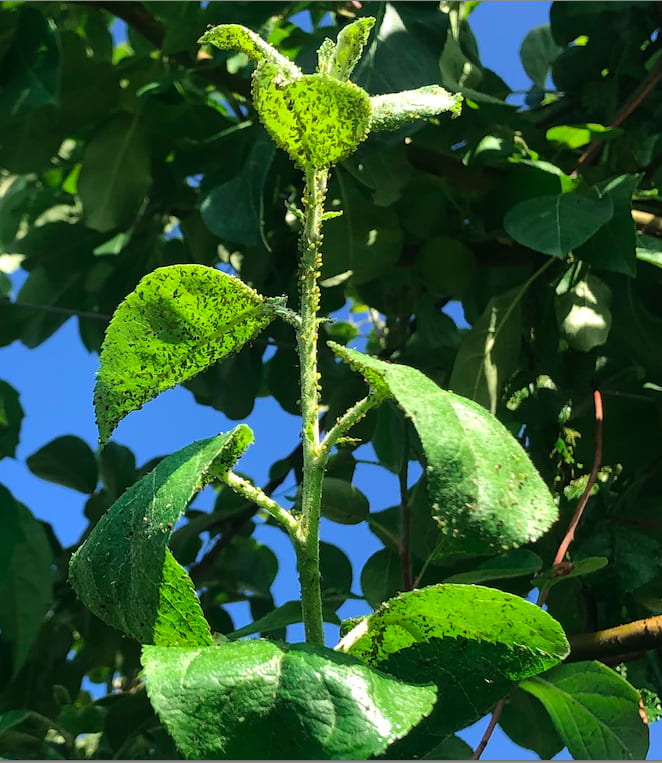
Low rates of insecticides in the Neonicotinoid class (Admire Pro, Assail, Actara) will reduce aphid populations while maintaining higher levels of predatory beneficial insects. Conserving ladybird beetle adult and larva, syrphid and cecidomyiidae larva will reduce aphids as the season progresses and may reduce the need for additional applications later in the season.

Potato Leafhopper (PLH) adults have also descended into the Hudson Valley, arriving on thermals, now infesting terminal shoots. Low rates of Neonicotinoid insecticides applied at 7-14 days will provide translaminar (locally systemic) presence of the active ingredient to manage the nymph stage of these pests, providing the environment for continued terminal growth in young trees.

Adult potato Leafhopper

Introduction: The aphid complex appears to be erupting during the June hot and dry condition we’ve been experiencing this week. The green aphid complex include the apple aphid, Aphis pomi, and spirea aphid, Aphis spiraecola. Typically populations begin increasing from mid June into July. Both species appear to be building rapidly on growing terminals of apple with very high populations observed on succulent new foliage. The ability of these insects to produce live young partially accounts for the rapid buildup of aphid populations. Unlike some aphid species, which migrate to an alternate host during the summer, green apple aphid spends its entire life cycle on apple.

Nymphs and adults of draw sap from foliage of growing terminals and water sprouts. Aphid feeding causes leaf curl, often causing the growing tip to stunt shoot growth on newly planted trees. The excretion of honeydew, the excreted sap shunted from aphids has been observed falling onto fruit and foliage. The development of black sooty mold (Ascomycete fungi) which grow on a sugar substrate, causes russeted areas on the fruit around the stem in hot weather, very apparent on light colored cultivars like Golden Delicious.

Aphid scouting should begin in mid-June. Sampling 10 rapidly growing terminals from each of 5 trees throughout the orchard with management recommended if 30% of the terminals are infested with either or both species of aphid or if 10% of the fruits exhibit either aphids or honeydew. Important biological control predators that feed on aphids include the larvae of syrphid and cecidomyiid flies. These beneficial insects complete three generations yearly, during the summer.

Multi-coloured Asian lady beetle adult with full complement of spots. J.Ogrodnick

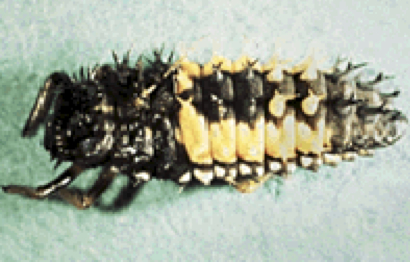
The multi-coloured Asian lady beetle, Harmonia axyridis (Pallas) (MALB), is an invasive insect that has flourished in the Northeastern US. Its overwintering presence in homes can not be overstated. Introduced as a beneficial insect to manage the aphid complex, the beetle will follow suit and begin feeding heavily on the aphids.

Using LOW RATES of neonicotinoid insecticides as the aphid populations begin to develop. The goal is to maintain low levels of aphids and conserve the predators at equally low levels to reduce the impact of damage to fruit. For example, the use of Admire Pro 4.6SC at about 1/3 the high rate, such as 1 oz./A, providing a reduction of the aphids while having low impact on the beetle, will thus conserve the beneficial complex.

Multi-coloured Asian lady beetle mature larva (fourth instar). M.H.Rhoades

Sunday, 13 June 2021

Morning Brew: : Tree Fruit Pest Management Conversations via Zoom. Tuesday, 6AM, June 14th, 2021 | The Jentsch Lab

Grab your coffee and join in the discussion from home or tractor seat.[/caption]

Hudson Valley Research Laboratory entomologist, Peter Jentsch, friends and guests invite you to join in discussions on Tree Fruit Pest Management from 6-7AM each Monday morning through the season via Zoom. The Zoom meeting site will open at 5:45AM for you to link into the meeting and get your coffee. We’ll start the agenda at 6AM.

Join in or simply listen to whats ahead form the coming week.
Agenda:
Welcome
-Recent weather, forecasts, tree phenology
-Application windows, pest management scouting, models for predicting management.
Diseases: Secondary scab, powdery mildew, black rot, fireblight
Insects:
-Insect insect life stages & management during early petal fall:
* Codling Moth Emergence: 2nd application B Peak
* Obliquebanded Leafroller: Emergence
* European Red Mite & Two Spotted Spider Mite
* Rosy Apple Aphid, Green Aphid Complex
* Wooly Apple Aphid & San Jose Scale @ 2C (Emergence Model)
* Dogwood Borer egg laying & larval emergence
* Black Stem Borer: Drought & heat stress in trees.

Beginning Steps…
A. Download Zoom on your computer, pad or phone devise you will use for the meeting.
B. Follow the prompts for software setup.

Meeting steps…
1. Join Zoom Meeting by clicking on or pasting the link into your browser:
https://us02web.zoom.us/j/4592490857?pwd=UzVMeTcvWHAyejhHZFA2MFZPbm1WUT09

Meeting ID: 459 249 0857
Passcode: pQ9St9

2. Or open Zoom software, copy and paste the Meeting ID: 930 4781 5060
Important…The meeting link may change every week as needed. Link on the most updated weekly email blog invitation.

Rules:
1. Let’s cover the basics of the days agenda, then open the floor for conversation.

2. All microphones will me muted as you enter the Zoom meeting. Please keep your mic muted during the meeting until you’re ready to join the conversation.

When you’re ready to join the conversation, un-mute your microphone and join in.

See you then

Saturday, 12 June 2021

Newly Planted Apple Insect Pest Management: European Corn Borer and Oriental Fruit Moth. June 12th 2021 | The Jentsch Lab

ECB Adult Flight, Egg Laying and Hatch Continuing
ECB Adult Flight Began Last Week in the Hudson Valley

Brief: Newly planted trees will continue to require irrigation during the latter part of the week. Ample rain in May (5.78″) will give way as forecasts call for low to mid 80s and scattered showers with minimal ground water accumulation. NEWA irrigation model for Highland presently displays a soil moisture deficit as June rainfall (0.24″) has not provided enough soil moisture to keep trees actively growing.

Drought conditions will often drive insect pests like the mite complex, stink bug and European corn borer (ECB) Ostrinia nubilalis into apple plantings. For ECB, succulent new growth provides ideal resources for developing larva. Egg laying of ECB has already begun. Hatch and management should begin at 800 DD base 50F. This is predicted over the next two weeks. Hatch of Oriental Fruit Moth (OFM) can also moving into apple shoots early in the season to cause flagged and dying shoots in unmanaged tree fruit.

The second generation of OFM historically emerges in June with larva emergence beginning in July. Terminal growth in newly planted apple is essential to develop fruit buds and laterial branching for next season. The loss of tree architecture in the first year will significantly reduce fruiting potential and subsequent economic returns. Scout across the block along the leaf stem nodes for frass and in shoots for flagging. Management should begin at first signs of injury. Materials used for management to control codling moth and obliquebanded leafroller should reduce ECB and OFM when applied to new plantings over the next few weeks.

ECB larva on apple
ECB larva on apple

In-Depth: When it comes to apple production we typically don’t concern ourselves with the likes of European corn borer. However, this insect, especially in years of drought can cause considerable damage to newly planted trees. Populations of ECB began in relatively low numbers throughout NY State this season but will likely continue to climb over the next few weeks. In new plantings we have seen ECB begin to burrow into the growing shoots in mid-late June so scouting should begin in newly planted trees this weekend.

ECB Frass, Infestation of Young Apple

Female ECB moths have begun laying egg masses on the underside of apple leaves with larva hatch observed. If ECB is present, larval feeding should become evident in newly developing apple shoots over the next few days. You will see brown frass and ooze where the leaf petiole and stem join. It is likely that fruit trees with ECB injury will have higher damage levels along the perimeter, especially where tall grasses and woody stemmed broad leaf weeds are present.

The Eastern strain of European corn borer (New York / Eastern Z-strain) has a wide host range, attacking robust herbaceous plants with a stem large enough for the larvae to enter. I have not heard reports of the new hybrid strain of ECB attacking apple. As the pheromone for this strain is under field investigation, I do not believe that it is yet commercially available.

Some of the common weeds infested include barnyardgrass, Echinochoa crus-galli; beggarticks, Bidens spp.; cocklebur, Xanthium spp.; dock, Rumex spp.; jimsonweed, Datura spp.; panic grass, Panicum spp.; pigweed, Amaranthus spp.; smartweed, Polygonum spp.; and others.

There are reports that severe weather influences European corn borer survival. Heavy precipitation during egg hatch is sometimes an important mortality factor. Low humidity, low nighttime temperatures, and heavy rain and wind are detrimental to moth survival and oviposition. However, like most insect pests, they seem to thrive during unlikely weather scenarios in years past. Drought seems to favor development and generational success.

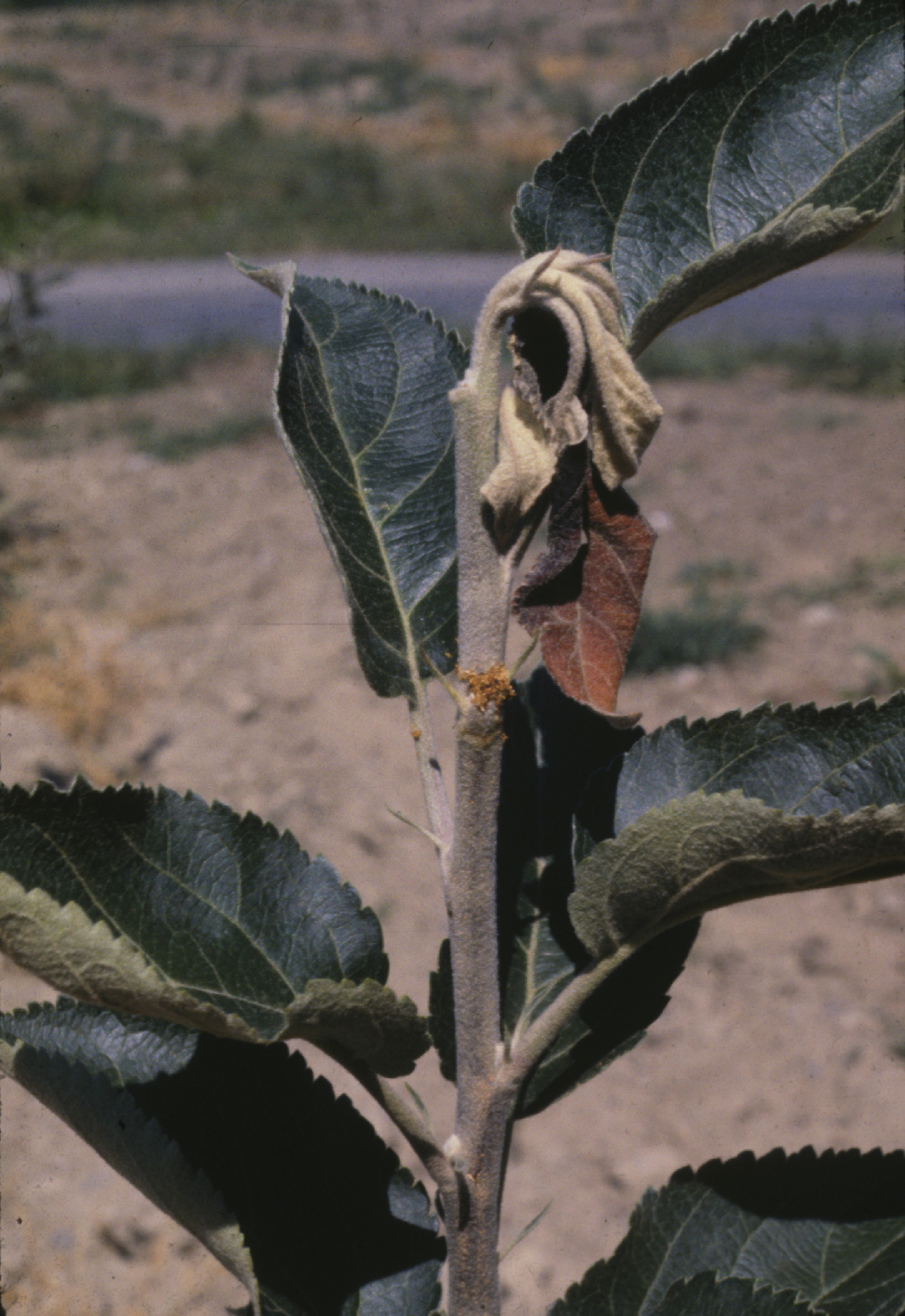
Typical examples of ECB feeding on apple is similar to that of Oriental Fruit Moth on apple with frass and entry under petiole or side of new shoots, producing terminal bud decline, flagging. In many cases, the loss of the central leader will occur, significantly reducing tree growth and fruiting establishment.

From prior observations, the larva reside within the upper most part of the shoot, 8-10 inches from the tip. Frass is visible at the base of the petiole and leaves are browning from the tip back toward the stem of infected stem portions (see images below).

Trap sites across NYS show very low early season adult flight. Later into the season we are now finding increasing ECB adults in pheromone traps across the state that will likely require intensive management on sweet corn.

Newly planted apple should be scouted frequently, especially if drought conditions continue during the latter part of the summer.

Irrigated apple become very attractive to ECB adults as they move out from low moisture weed hosts along orchard borders. Pheromone trap placement for ECB in newly established orchards should be along the edge where know weed host plants reside.

Efficacy of pyrethroids on ECB

Applications of most insecticides will do little to manage the larva within the tree. However, management at the early onset of hatch will reduce further infestations in blocks that already show the beginnings of ECB boring and larval feeding.

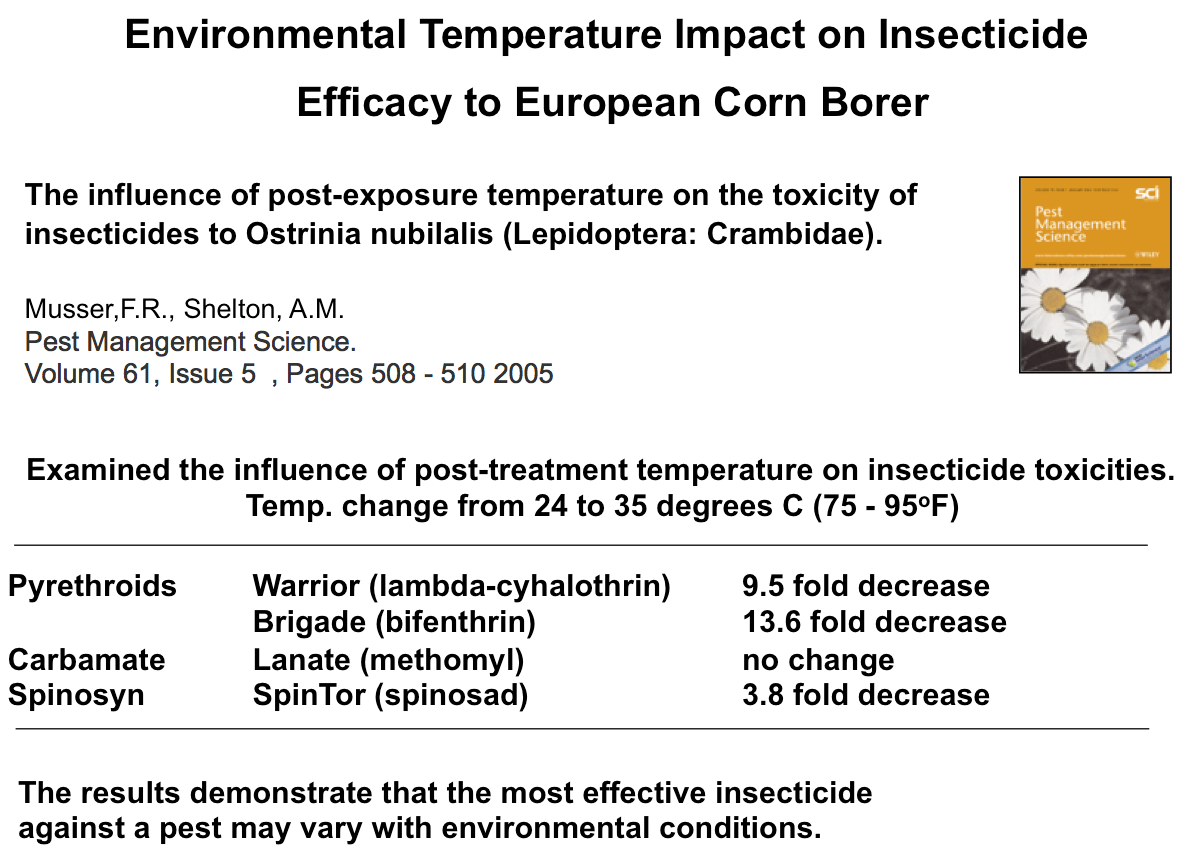
Pyrethroids become less effective to ECB populations as temperatures increase, as this class of insecticides is more readily detoxified by insects when temperatures exceed 70F.

In non-fruiting and newly planted apple Delegate 25WG is labeled for use on apple in NY and is very effective at controlling ECB on newly planted trees. Delegate and generally the spinosad class of insecticides are not as negatively effected by increased temperature. Bt formulations are also labeled for ECB, and may require tight intervals for acceptable management during periods of intense sunlight and heavy weathering. IRAC 28 insecticides (Altacor, Exirel, Verdepryn) applied for CM and OBLR will also effectively manage corn borer in fruiting trees.

Temp. Effect on ECB Efficacy (Tony Shelton, NYSAES)

Insecticides used against codling moth at this time will likely impact ECB, however, newly planted trees that have no marketable crop are often ignored as mature trees with fruit near harvest, and concerns over CM and apple maggot infestations to the crop distract growers from attending to new plantings. Management of ECB to reduce shoot injury to newly planted trees will require a specific management plan and no less then bi-weekly applications of effective insecticides to maintain terminal shoot growth during ECB hatch.

The Sweet Corn Pheromone Trap Network Report has regional trap counts for European Corn Borer and degree day accumulations.

Monday, 7 June 2021

In Flight: CM, SJS and OBLR Management During Emergence This Week. June 7th, 2021 | The Jentsch Lab

SJS 2nd Gen. Nymphs on Black Electrical Tape (2017)

Brief: A number of pests presently and about to emerge should be considered for management in commercial blocks this week.

Codling moth (CM) is in full flight with egg laying and larva now emerging. Management should continue with a second application 10-14d after the date of the first, occurring in Highland at the onset of emergence on the 28th of May. This application will provide residue for OBLR emergence occurring mid-June.

San Jose Scale (SJS) have been on the wing since mid-May. We expect crawlers to emerge in southern Hudson Valley sites beginning early June (this week). Management for SJS include contact insecticides directed against the emerging crawlers can be found in a prior post (linked here). Black electrical tape on infested limbs with a thin coating of Vaseline will capture emerging nymphs and provide precise emergence timing for insecticide application.

Obliquebanded leafroller (OBLR): We are also at the period of the season when obliquebanded leafroller (OBLR) adults are beginning to emerge and are now in flight with first trap captures in Milton and Walden. They will soon begin their egg laying in earnest next week with egg hatch not too far behind.

1st gen. CM larva.

Based on NOAA weather forecasts, predicted emergence date for the 1st generation OBLR larva is the 16th of June.

In orchards that have had a past history of severe OBLR fruit damage or if populations of overwintering larvae were high, apply protective applications based on the first sustained trap capture in your orchard (biofix). The first management application should be timed to coincide with the first hatch of larvae at approximately 350 DD base 43F after biofix followed by a second spray 10-14 days later.

OBLR Pheromone Trap
OBLR Pheromone Trap

In-Depth:
OBLR: If we capture OBLR over two to three successive days (sustained flight) we will establish the biofix date and begin calculating heat accumulations using 45DD to help us determine, using the NEWA model, the early period of emergence for optimum timing of insecticide applications. If you find OBLR in your traps prior to or after our trap findings you can use the NEWA site to fine tune your application window.

Over the past ten years, growers have been able to control OBLR larva through the use of effective insecticide programs targeting three periods of larval activity. These include:
* Employ applications against the overwintering generation during either the pre-bloom / bloom or petal fall periods
* Use 1-2 applications against the summer generation
* In high population years target 1 application against late summer generation.

For the three periods of management we recommend using two or three distinct yet very effective active ingredient groups or IRAC classes. In this way we hope to reduce the resistance potential of the insect over time.

Late season fruit feeding Fruit injury caused by second brood obliquebanded leafroller larvae

The classes used against the leafrollers with highest degree of efficacy include:
Entrust 2SC, 80WP (spinosad) (IRAC Class 5), have been used successfully against the leafroller surface feeding and internal Lep. complex.
Delegate (spinetoram) (IRAC Class 5), is a broad spectrum synthetic modification of spinosad against leafroller and internal Lep. complex. The placement for these materials has been predominately at the onset of hatch of the summer generation larva of OBLR, providing excellent results in NY State.
Proclaim (emamectin benzoate) (IRAC 6), a second-generation avermectin insecticide related to Agri-Mek, is also an excellent insecticide against the OBLR while having a low impact on beneficial mites.
Bt products such as Biobit, Dipel, Javelin, and MVP (IRAC 11 B2) also have a low impact on beneficial mite and are very effective against OBLR.
Intrepid (methoxyfen-ozide) (IRAC 18A) another reduced risk insecticide very effective against the larva, imitates the natural insect molting hormone and works by initiating the molting process. Intrepid is quite safe to birds, fish, and most beneficial insects.
Altacor (chlorantraniliprole) (IRAC Class 28) is a anthranilic diamides, which activate the insect’s ryanodine receptors, stimulating release of calcium from muscle tissues, and causing paralysis and death, controls of a range of insect pests in pome and stone fruits. These include codling moth, oriental fruit moth, and obliquebanded leafroller, green fruitworm, spotted tentiform leafminer, apple sawfly, European corn borer, and suppression of apple maggot, cherry fruit fly, white apple leafhopper, and plum curculio. It has low toxicity to bees, beneficial mites, birds, fish and mammals. Not registered for use in Kings, Queens, Nassau, or Suffolk Counties.
Exirel (Cyantraniliprole ) (IRAC Class 28) is also a 2nd-generation anthranilic diamide. Like Altacor, Exirel is labeled for the control of a range of insect pests in pome and stone fruits, including codling moth, oriental fruit moth, and obliquebanded leafroller. Other species listed on the label include green fruitworm, spotted tentiform leafminer, European apple sawfly, white apple leafhopper, cherry fruit fly, spotted wing drosophila, and Japanese beetle, with activity against pear psylla and plum curculio, and suppression of apple maggot. It has high toxicity to bees, but low toxicity to birds, fish and mammals.
• Verdepryn (Cyclaniliprole) is a new member of the diamide group (IRAC 28) that includes *†Altacor and *†Exirel, effective against plum curculio and European apple sawfly as well as the fruit-feeding leps such as codling moth, oriental fruit moth, and OBLR. Additional pests on the label include pear psylla, white apple leafhopper, European corn borer, leafminers, other leafrollers, cherry fruit fly, spotted wing drosophila and Japanese beetle. Restricted use, labeled in pome and stone fruits; not for use in Nassau or Suffolk Counties. It has a high bee-poisoning hazard.

Premix Insecticides:
Besiege (Chlorantraniliprole/Lambda-cyhalothrin) (IRAC Class 28 & 3), pome fruit label includes internal worms and leafrollers, aphids, (excluding woolly apple aphid), apple maggot and cherry fruit fly adults, leafhoppers, leafminers, plum curculio, Japanese beetle, pear psylla, plant bugs, stink bugs, and other caterpillars.
Voliam Flexi (Chlorantraniliprole/Thiamethoxam) (IRAC Class 28 & 4A) is effective against a range of pests in pome and stone fruits in NYS. This product is a mixture of thiamethoxam, the a.i. of Actara, and chlorantraniliprole, the a.i. found in *†Altacor and *†Voliam Xpress. The label lists lepidopteran pests such as codling moth and oriental fruit moth, obliquebanded leafroller, leafminers and green fruitworm; plum curculio; European apple sawfly; leafhoppers and aphids (except woolly apple aphid); pear psylla; plus (in stone fruits only) cherry fruit fly, stink bugs, tarnished plant bug and thrips.
Minecto Pro (Cyantraniliprole/Abamectin) (IRAC Class 28 & 6) is a pre-mix combination of cyantraniliprole and abamectin, labeled for pome fruit and stone fruit use in NY to control Lepidoptera species and mite when used with a penetrant. It is a restricted use pesticide with a high bee-poisoning hazard; not registered for use in Nassau or Suffolk counties.

Since the development of insecticide resistance is dependent on the volume and frequency of applications of insecticides and the inherent characteristics of the insect species, we should limit one insecticide class to a single generation of pest for resistance management purposes. The present model for insecticide resistance management (IRM) practices then is to use a single insecticide class for a single generation of insect pest.

For example, an IRM program against the lepidopteran complex, specifically OBLR, would use effective insecticides listed above (X, Y, Z) in three different IRAC classes (A, B, C) throughout the season.

Insecticide X (Class A) 1 application @ TC-P or PF for overwintering OBLR
Insecticide Y (Class B) 2 applications @ 14d; first emergence of 1st brood OBLR larva
Insecticide Z (Class C) 1 application @ first emergence of 2nd brood OBLR larva if needed.

Given the historic failures the apple industry has experienced managing the leafroller and internal worm complex, we should consider designing programs to maintain the effectiveness of these excellent IPM tools beginning early in the season, before the heat of the battle begins.